Published by NewSouth Publishing, 2015.

Alpine daisies and Mount Kosciuszko
opening lines:
“Into the night I can’t take my eyes off that sawtooth line of mountaintops that over-reach, perhaps overwhelm, my campsite.”
…
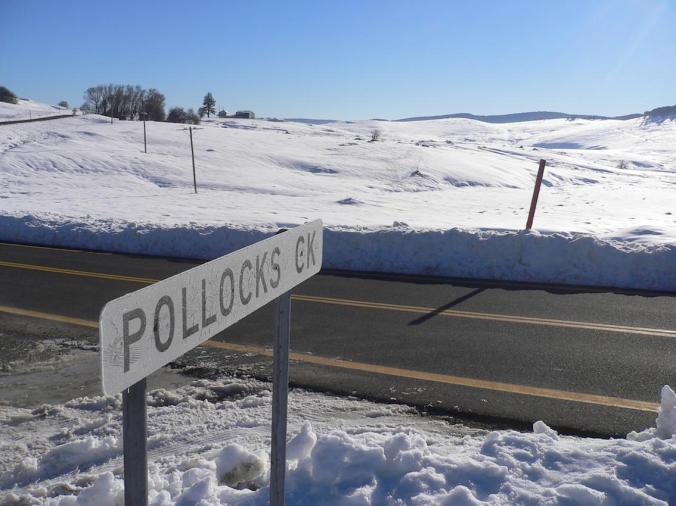
This publication details John Blay’s impressive search for the lost ancient Aboriginal route, the Bundian Way, between the high country and south coast of New South Wales. Blay conveys some rather stunning and diverse country on this often remote bushwalk from the mountains to the sea, and details the peopled histories of the places he journeys through. He introduces us to the Ngarigo, Yaitmathang, Yuin and Biduelli tribes; often focuses on the records of Brierly, Robinson, Howitt and Clarke; and delves into the many stories of the Bundian Way. It is incredible to realise page by page just how much effort and planning such an undertaking required, and there is a strong overarching sense of place throughout the book. But the real jewel of this book is Blay’s determination to bring the old Aboriginal landscape to life, and his recognition of the role of the Bundian Way as a literal path to reconciliation.
However the book did have some drawbacks; the primary one was that the writing often felt uneven. It seemed to alternate between engaging and poetic to becoming bogged down in descriptive detail; sometimes it felt like Blay was unconsciously imitating the straightforward diary entries of the Europeans whose writing he referenced throughout the book. I also started to harbour some doubts on the veracity of the author’s natural history observations. For example: on page 64 Blay mentions ‘hundreds of wanderer butterflies’ despite this being an unlikely scenario given the country he is in – I suspect he meant forest-loving Common Brown butterflies instead; on page 70 he mentions hearing the ‘whooshing’ noise of a Powerful Owl’s wings, yet owls have silent flight; and on page 256 he records ‘…as thornbills chide me with their insistent tsk tsk tsk…’ in rainforest habitat, when he surely meant the oft-heard scolding call typical of scrub-wrens instead.
This book’s strength, on the whole, is the detailing of people and their connections, past and present, of the Bundian Way, and this is where Blay’s writing shines. As a result of Blay’s efforts and in conjunction with the Eden Local Aboriginal Land Council, the Bundian Way is now listed on the NSW state heritage register. In the closing pages of his book, Blay indicates the intention of opening the Bundian Way as an ecotourism venture to the public and the first coastal stage has opened. When the full length of the Bundian Way is open, it will undoubtedly be a walk of national importance.
 a sense of place